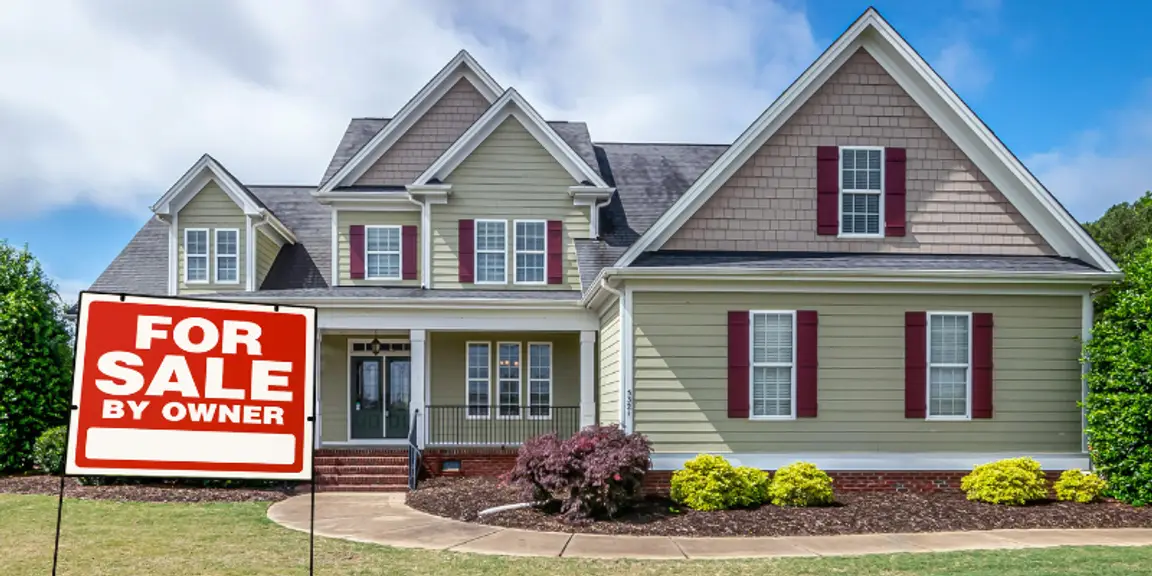

Somewhere around closing day, the math finally lands. You just handed tens of thousands of dollars to two strangers who showed up for maybe forty hours of combined work. That’s not a knock on agents across the board. Plenty of them earn every dollar. But picture your kitchen table in Katy, or Pflugerville, or Corpus Christi. You’re looking at a home you’ve owned for fifteen years. It’s fair to ask whether you can pull this off alone.
Short answer: yes. Thousands of Texans do it every year. There’s a wide gap between possible and easy, though, and most articles on sale by owner don’t respect that gap. Here’s the real version.
What Is FSBO and How Does It Work in Texas?
Only 5% of home sales nationally are FSBO transactions, according to the National Association of Realtors’ 2025 Profile of Home Buyers and Sellers. That’s an all-time low. Part of it is that most sellers have never watched a FSBO sale up close. Part of it is that agents still control the front door to the MLS.
FSBO stands for “for sale by owner.” In Texas, it means you’re the one running things. You set the price, market the property, negotiate terms, and handle closing. No listing agent sits on your side.
Whether you offer to pay a buyer’s agent is up to you, and plenty of Texas FSBO sellers do, often somewhere in the 2% to 3% commission range. One thing changed in 2024, though. Since August 17 of that year, offers of buyer-broker compensation can’t be posted on the MLS at all. You can still negotiate that pay directly with a buyer’s agent, or handle it through seller concessions. Commission still gets paid, just not advertised there.
Getting on the Multiple Listing Service without an agent takes a flat-fee MLS company. Flat-fee MLS services usually charge between $300 and $500 to list your home without full service. Which one you land on depends on where you live. NTREIS covers Dallas-Fort Worth, HAR MLS covers Houston, Unlock MLS covers Austin, and LERA MLS covers San Antonio. Read the fine print before you pay. Some packages cap your photos at six or charge extra for edits.
We’ve watched sellers skip the MLS entirely, banking on yard signs and Facebook Marketplace. In a hot seller’s market, that sometimes works. Texas sat at 5.4 months of inventory in the second quarter of 2026, close to a balanced market, and buyers here open Zillow before they open the fridge. Skipping the MLS leaves buyers on the table. Get on it. That inventory number also shapes how long it takes to sell a house in Texas, which is worth knowing before you pick a listing date.
If you’d rather skip the MLS, showings, and the work of managing a FSBO sale, Investor Home Buyers can make you a cash offer for your Texas property. You can sell as-is, avoid agent commissions, and choose a closing date that works for you.
How to Price Your Texas Home Correctly Without an Agent
Buyers walk away over pricing errors more often than over inspection findings. A house priced right survives a rough inspection report because the buyer still feels the value is there. Price it wrong, and it gets scrolled past. The inspection conversation never happens at all.
Without full MLS access, every FSBO seller works from partial data. Zillow’s Zestimate can drift badly here. Odd lot shapes, mixed build years, and HOA quirks all throw it off. Your property is worth what a buyer will pay for it, not what a model says. If you’re unsure about your pricing strategy, you can also easily attract a company that buys homes in Houston and surrounding Texas cities by considering a direct cash offer.
Understand this before you start pulling comps: Texas is a non-disclosure state. Sale prices aren’t public record here, and your county appraisal district can’t compel anyone to report them. The Travis Central Appraisal District and every other county CAD will hand you square footage, year built, lot size, and appraised value. What the place down the street actually went for isn’t in there. Most FSBO guides skip right past that.
Work around it. Zillow and Redfin publish closing prices for anything that ran through the MLS, and that covers most of the market. Pull what sold in the last 90 days within a half-mile. Look at what went under contract and fell out, since that usually flags an overpriced listing. Then check what’s sitting with price cuts. A price cut is just the market correcting a bad starting number.
An agent would have all this in ten minutes. You can also pay for an appraisal, which in Texas usually runs $425 to $650 for a single-family home. That report gives you something solid to point at when a buyer pushes back. Overpricing is the most expensive mistake a FSBO seller makes. Every market has a price where phones start ringing.
What Texas Real Estate Laws Apply to FSBO Sellers?

Texas real estate law doesn’t let you off the hook because you’re selling yourself. The FSBO label changes nothing about your duties.
Nearly every Texas home seller has to deliver a written disclosure notice to the buyer. Texas Property Code Section 5.008 governs it, and the free TREC Seller’s Disclosure Notice (TREC No. 55-1) is the version most for-sale-by-owner sellers use. The notice is due on or before the effective date of the contract. Miss that, and your buyer can terminate for any reason within seven days of finally receiving the disclosure.
Disclosure is not optional here. You carry the same duty as sellers with a listing agent behind them. The notice walks the property system by system: roof, foundation, plumbing, electrical, HVAC, flood history, known defects. You check boxes, explain what needs explaining, and sign. Texas expects you to reveal any known material fact about the property. Old water damage counts, even if it was one leak years ago.
Exemptions here are narrower than sellers hope. They’re also not the ones sellers expect. Section 5.008 does exempt a fiduciary selling during administration of a decedent’s estate, and it exempts transfers to a spouse or to someone in your direct family line. If you inherited a home and now own it outright, though, you’re a regular seller with a regular disclosure duty. Check with a Texas real estate attorney if your case sits anywhere near that line.
On the contract side, Texas requires a signed written contract for any enforceable real estate sale. You aren’t required to use a TREC contract form. Still, TREC’s One to Four Family Residential Contract is the standard, and title companies know it cold. Writing your own language without legal review isn’t worth the small savings. The Texas Real Estate Commission publishes its forms for free, and you can download them directly.
What Paperwork Do You Need to Sell a House by Owner in Texas?
Sellers new to FSBO assume the paperwork is sealed knowledge only agents hold. The forms themselves aren’t complicated. Knowing which ones apply to you is the part that trips people up.
Core documents for a Texas FSBO sale: the Residential Purchase Agreement, the Seller’s Disclosure Notice, and an HOA Addendum if you’re in an association. Add the Lead-Based Paint Addendum for homes built before 1978, and a MUD Notice if your property sits in a municipal utility district.
Federal law drives the Lead-Based Paint Addendum, not Texas. Homes built before 1978 trigger it, and a home built in 1978 or later doesn’t. You give buyers the disclosure form and ten days to run a lead paint inspection or risk assessment, though they can waive that in writing. Skip the step, and you’re exposed to federal liability, not just a civil claim.
Homes in HOA communities need that addendum plus a resale certificate covering finances, rules, and pending dues. Texas law gives the association 10 business days to deliver it after a written request. It can charge up to $375 to assemble and deliver, plus up to $75 for an update. Order it early, because ten business days lands right in the middle of most closing timelines.
Your title company handles most of the closing documents: the deed, the settlement statement, the transfer paperwork. Their job is the mechanics of ownership. Yours is clean title, honest disclosures, and a signed contract. If your title history has anything odd in it, like an old lien, a divorce, or an estate, put it in front of the title company before you list the property.
Early last year, a family in Garland reached out to us three weeks into escrow. They had just found a mechanic’s lien from a kitchen renovation three years earlier. Their contractor filed it, got paid, and never released it. Closing was in doubt, with buyers ready to walk. A title search before listing would have caught it in a day. If a paperwork issue has you reconsidering FSBO, Texas cash buyers can also offer an alternative to navigating every step of a traditional sale yourself.
How to Market a Texas Home for Sale by Owner

A FSBO seller in Cedar Park listed a three-bedroom on a Thursday with a yard sign and two blurry iPhone photos. Two weeks later, nothing. She relisted with sharp photos and a flat-fee MLS listing, and had an offer by the following weekend. Marketing a FSBO home is where most sellers underinvest. Cedar Park sits just north of Austin, and some sellers there skip the marketing work entirely and go straight to cash home buyers in Austin.
Photography is your first impression, and buyers scroll fast. A standard shoot for a mid-size Texas home runs roughly $200 to $350, and this is one line item where skimping shows. Wide-angle lenses, real lighting, and an exterior shot taken in decent light are table stakes. If you’ve got a pool, mature landscaping, or a view of the Texas Hill Country, drone work adds somewhere around $75 to $350 and earns it back on larger rural lots.
Beyond photos, your marketing toolkit for FSBO should include:
- MLS listing via a flat fee service (the non-negotiable one)
- Zillow, Redfin, and Realtor.com (most flat fee services push it there for you)
- A yard sign with your contact number big enough to read from a moving car
- Posts in neighborhood Facebook groups and Nextdoor, which convert well in tight communities like The Woodlands or Southlake
Price your home to show up in search filters. Buyers on Zillow search in round brackets: $250,000 to $300,000, then $300,000 to $350,000. Price it at $302,000, and you disappear for everyone searching under $300,000. That’s a real slice of your market, lost over a $2,000 difference.
Open houses still pull traffic in plenty of Texas neighborhoods, mostly on Saturday mornings. Post them on Zillow, set signs out that morning, and keep your disclosure packet ready for whoever asks.
Step-by-step Process to Sell Your Texas Home Without a Realtor
Here’s the whole FSBO process, start to finish.
Step one: get your price right. Pull closed comps from Zillow and Redfin, check your county CAD for property details, and pay for an appraisal if you’re unsure. Everything else follows the price.
Step two: complete your disclosure paperwork before you list. Fill out the TREC Seller’s Disclosure Notice accurately, and deliver it on or before the contract’s effective date. If your home has known issues, say so. Hiding problems doesn’t survive inspection anyway, and you’d be trading a clean sale for legal exposure that outlasts it.
Step three: get the home ready. Deep clean, declutter, and handle the obvious deferred repairs an inspection will surface anyway. You don’t have to renovate. You do have to show the home at its honest best.
Step four: hire a photographer. This single step separates the FSBO listings that move from the ones that sit.
Step five: list on the MLS through a flat-fee service. They push it out to Zillow, Redfin, and Realtor.com for you. If you’re paying a buyer’s agent, negotiate it directly or through concessions, since it can’t go in the listing.
Step six: manage showings. Use a lockbox and make the home easy to get into. A buyer who can’t get in moves on.
Step seven: review offers carefully. Price isn’t the whole picture. Financing contingencies, inspection periods, closing timeline, earnest money, and requested concessions all move your net. The highest offer is sometimes the worst outcome.
Step eight: open escrow with a title company. Hand over the signed contract and let the title company start. Stay on top of the inspection response window and any repair talks that follow.
Step nine: close. Show up, sign, collect your proceeds.
How Much Money Can You Save Without a Realtor in Texas?

Can you keep the commission by selling yourself? Yes. The commission question is the one everybody starts with, and the math is messier than the headline.
Texas commissions are negotiable. They usually land around 5% to 6% of the sale price, split between the listing side and the buyer’s side. Going for sale by owner removes the listing side. If you still pay a buyer’s agent, your savings come to roughly half the total. On a home at the Texas median price of $340,000, that’s somewhere around $8,500 to $10,200 staying in your pocket.
Sellers who pay no buyer’s agent at all keep more. Commission on that side is negotiable too. You’ll also be negotiating directly with buyers whose agents may quietly steer them elsewhere, and that friction is real. If you don’t want to handle those negotiations yourself, cash house buyers in Fort Worth and other Texas cities can provide another option for selling directly.
One counterargument deserves weight. NAR’s 2025 data puts the median FSBO sale price at $360,000 against $425,000 for agent-assisted sales. Those aren’t identical homes in identical markets, so it isn’t a clean comparison. Your savings still only hold up if your price lands near where an agent’s would have. Underprice by ten percent because you skipped a real comparative market analysis, and you’ve given away far more than the commission you saved.
Texas sellers also pay closing costs separate from commission, commonly somewhere in the 1.25% to 3% range. That covers owner’s title insurance, escrow and settlement fees, prorated taxes, and related charges. Those exist with or without an agent. If you want the line-item version, our breakdown of whether a seller pays closing costs in Texas covers what each fee actually pays for.
What Are the Alternatives to FSBO in Texas?
Pick the wrong alternative, and you’ll spend three months doing half the work of a sale by owner while still paying most of the commission.
The traditional route is a full-service listing agent. You pay a full commission, commonly 5% to 6%, and they handle marketing, showings, negotiation, and paperwork. A good agent earns that fee in negotiation alone. For a seller short on time or confidence, that trade can be worth it.
A discount or flat-fee broker sits in the middle. You pay a reduced listing commission, often quoted around 1% to 1.5%, in exchange for limited support. Some discount brokers are excellent. Others hand you a contract template and go quiet. Ask exactly what’s included before you sign a listing agreement.
Flat-fee MLS services give you access for a few hundred dollars and nothing else. It’s really an FSBO sale with one less barrier in the way.
Selling to a cash buyer or investor is the fourth path, and it fits certain spots. Inherited homes. Properties needing serious repairs. Sellers under time pressure from a job move, a divorce, or a health issue. Cash offers come in below retail market value, and what you get back is speed and certainty. A cash sale closes faster, skips the inspection and repair cycle, and doesn’t collapse when a buyer’s loan gets denied.
If a fast, straightforward sale sounds like the better option, you can contact us to learn what a cash offer for your Texas property might look like. There’s no obligation, just a simple way to compare your options and decide what works best for you.
Frequently Asked Questions
Is Selling for Sale by Owner a Good Idea?
Depends on your case more than on any broad rule. FSBO works well for sellers with time, some real estate experience, a home in good condition, and a local market where buyers are active. Not every home should sell this way. Maybe your property needs repairs, or your timeline is tight, or the paperwork side makes you uneasy. An agent or a direct buyer may net you more, even after fees.
What Paperwork Do You Need for a Sale by Owner in Texas?
At minimum: a signed purchase agreement, the TREC Seller’s Disclosure Notice (TREC No. 55-1), and whatever addenda your property calls for. That means an HOA addendum in an association, a Lead-Based Paint Addendum for a home built before 1978, and a MUD Notice inside a municipal utility district. Your title company walks you through the closing documents, but the disclosure and the contract need to be right before you go under contract.
How Do I Protect Myself in a By-Owner Sale?
Accurate disclosures are your first line of protection. Texas holds sellers liable for material defects they knowingly conceal, so fill out the TREC Seller’s Disclosure Notice honestly and in full. Beyond that, use a written purchase contract that a real estate attorney has read. Open escrow with a title company you trust. Collect earnest money at signing so buyers have something at stake. Keep copies of everything you sign or hand to the buyer.
If you’re still figuring out which path makes the most sense for your property, we’re happy to talk it through. Investor Home Buyers has worked with homeowners across Texas in all kinds of situations: estates, repairs needed, time pressure, or just wanting a straightforward sale without the hassle of the traditional process. Call us at (214) 253-4544 to discuss your situation and learn about your options. No pressure, no obligation. Just an honest conversation about what your options actually are.
Helpful Texas Blog Articles