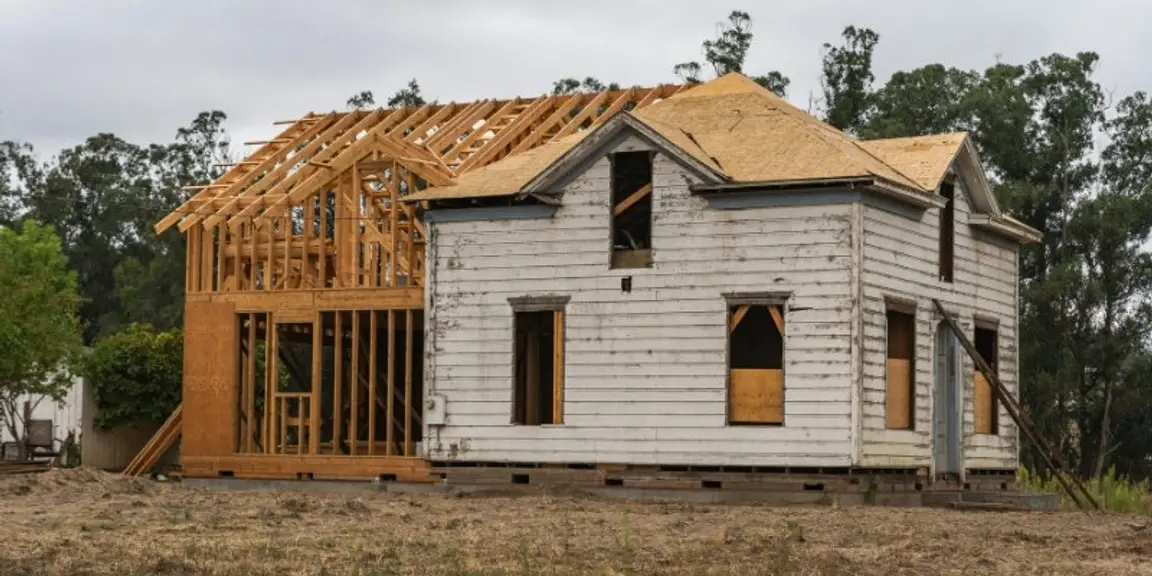

Water finds the cheapest way in. A pinhole gap around the chimney flashing stains the ceiling, softens the subfloor, then becomes a mold question, which an adjuster waves off because the damage developed slowly. I’ve walked into houses where a few hundred dollars’ worth of caulk, applied early, would’ve stopped a five-figure problem.
Selling a house that needs major repairs makes people nervous. You’ve heard that buyers only want move-in ready, that lenders run from a bad roof, and that the first investor through the door will try to steal it. Some of that holds up. Most of it bends once you see how buyers price risk.
Your real choice is narrower than it feels. Spend money you may not have chasing a higher sale price, or price the house honestly and keep the difference in time and certainty. Everything below is about making that call with numbers instead of nerves.
Can You Afford to Fix Up Your Home Before Selling It?
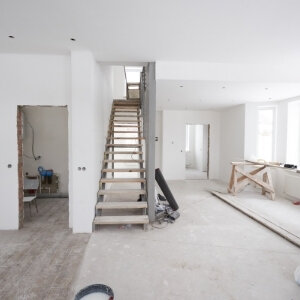
Contractors charge a premium for pre-sale work. The deadline is real, you can’t wait for a better number, and every change order lands on somebody who has already committed. That premium never shows up on the legal pad.
Your mortgage doesn’t pause for a kitchen remodel. Neither do taxes, utilities, or insurance. A four-month renovation means four more rounds of all of it, plus interest if you borrowed to fund the work.
Most renovation budgets I’ve watched run a quarter past the first estimate, and the overage lands on whatever sits last in the scope.
Scope creep is the quiet killer. You open a wall chasing a leak and find knob-and-tube. You pull up the carpet, expecting hardwood, and find particleboard. Each discovery needs a decision, each decision needs a price, and the crew stands idle while you think. Work a previous owner did without a permit is the expensive version of that surprise, and it’s worth knowing what happens when you sell a house without permits.
Insurers have gotten picky about older roofs, aging panels, and houses nobody lives in. Many carriers treat an empty house under different terms. Call your agent before it empties and ask how many vacant days trigger the change.
Half-finished renovations are where sellers bleed. A partly updated kitchen reads worse than an honest 1980s kitchen, because now a buyer has to undo your work first. They’ll price the hidden problems as worse than the visible ones.
Renovating does work for some people: real cash reserves, a contractor you’ve used before, no deadline pressure, and cosmetic rather than structural repairs. Miss two of those four, and the path usually costs more than it returns.
Before you commit, ask where the money comes from. A home equity line against a property with a failing roof may not appraise the way you hope. Then run the honest math. Take the contractor’s number, add a contingency, then add every month of mortgage, taxes, insurance, and utilities you’ll carry. If that total doesn’t comfortably beat the gap between the fixed-up price and the as-is price, you’re working for free and holding all the risk. That’s not a renovation. That’s a hobby with a deadline.
If you’d rather skip the renovation math altogether, you can tell us about your house and see what an as-is number looks like before you spend a dollar.
What Is Your Home Worth As-is (and How Should You Price It)?
For years, I priced as-is homes with simple subtraction. Fixed-up value minus the repair estimate, list it there, done. That math is wrong, and it cost a few early sellers I advised real money.
Buyers don’t just deduct the repair bill. They deduct the bill, plus a cushion for whatever the inspection hasn’t found yet, plus the months they’ll spend showering in a construction zone, plus a margin if they’re an investor. On a house worth $350,000 fixed up with $15,000 of visible work, serious offers land under $335,000, not at it.
Closed sales from the past couple of months in similar condition are the only comps that matter. Active listings tell you what other sellers wish they could get.
Condition is the hard part, because the public record doesn’t capture it. Two houses on the same street with identical square footage can sell for very different prices. Ask your agent to pull the closed sales and open the old listing photos. Your number lives in the pile that looks like your house.
National numbers are the backdrop, not the answer. NAR put the median existing-home price at $429,100 in August 2026, up 1.6 percent year over year. Prices also rose in 80 percent of metro areas during the second quarter of 2026. The market hasn’t collapsed under you. Your block still sets your price.
Three siblings once called me about their late mother’s house here in the Dallas area. Two listings had expired with no offers, because buyers kept noticing the cracked brick and the doors that wouldn’t latch. What finally moved it was a dumpster, two weekends of hauling, a written estimate for the foundation work, and a number that matched what the house actually was. Buyers stopped guessing at those cracks once a real figure was attached.
Most of the work we do as a company that buys houses in Plano, TX, starts the same way, with nobody having put a figure on the scary part.
Small price cuts are how a fixer-upper goes stale, because each one signals another is coming, and buyers learn to wait. The first two weeks on the market are the only two weeks you get full attention. Price it wrong, and you spend them teaching people that your house is overpriced. Price right, and you get the one thing that best protects a distressed seller: more than one interested party at once.
Two numbers matter before you set a price. What the property sells for fixed up, and what a contractor would charge for the whole scope. Get a written repair estimate even if you’ll never do the work. That document becomes your floor when somebody claims the foundation needs $60,000 of attention.
Get a second opinion where the money is big. A foundation company that also sells the fix has an interest in the number being large. In contrast, a structural engineer sells an opinion and nothing else, and often writes a very different report.
Which Home Repairs and Upgrades Are Worth Making Before You List?
A sagging wooden garage door with a cracked panel, peeling trim, and oil stains down the driveway. Same house two weekends later with a new steel door, fresh paint on the jambs, and a pressure-washed driveway. Showing traffic doubled.
Curb appeal pays better than anything happening inside. Garage door replacement topped Zonda’s 2025 Cost vs. Value Report at roughly a 268 percent return on an average job cost of $4,672, with a steel entry door second at around 216 percent.
Cleaning and clearing beat remodeling every time. A $3,000 budget spent on a dumpster, a deep clean, and cut grass moves the needle more than $10,000 spent on half a kitchen.
If you do nothing else, do this in order. Haul everything out, scrub what’s left, cut the grass, and handle the odor. Smell is the one thing photos can’t hide, and buyers can’t unlearn, so pull the carpet and pad that’s holding it rather than masking it. Then clear a path to the furnace, water heater, and panel, since the inspector needs them.
Paint is the one interior exception I’ll argue for. Neutral paint over water-stained walls and nicotine-yellowed ceilings changes how a whole house photographs and smells. Prime the stains first, or they’ll bleed through and you’ll pay twice.
Skip the big stuff. Roof replacement, foundation work, full HVAC swaps, and sewer line repair rarely return their cost at resale, because buyers credit you for a working system rather than paying extra for a new one.
Safety items don’t belong on that skip list. An appraiser flags exposed wiring, a missing stair handrail, a water heater with no temperature and pressure relief valve, and peeling paint in a pre-1978 home. Add smoke detectors and a missing GFCI outlet near a sink. None of it raises your price. All of it keeps a sale from dying over something trivial.
My rule after buying hundreds of houses: fix what’s cheap and visible, disclose what’s expensive and hidden, and price accordingly. Sellers who hide a known problem don’t save money. They lose the buyer at inspection and sell for less than they would have if they’d been upfront.
That holds for anything that scares people out of proportion. If mold is present, a remediation estimate in your listing file is an asset; the same goes for a cracked foundation wall, knob-and-tube wiring, or a roof nearing the end of its life. A documented problem is a line item. An undocumented one is a reason to walk. If you’d rather hand the whole list over instead of sorting it into fix, disclose, and price, we buy houses as-is in Texas.
Should You Sell Your Fixer-upper to an Investor?

“Am I just going to get lowballed?”
Fair question. The answer depends on who shows up. A real cash buyer builds an offer based on three factors: the after-repair value, the true repair cost, and a margin. Change any one of them, and the number moves. Ask a buyer to walk you through all three. If they won’t, you’ve learned something.
What you trade for a lower gross price is everything that normally eats your net: no agent commission, no repair credits after inspection, no appraisal risk, no months of carrying costs. A retail sale can look higher on paper and land lower in your account.
Ask for both numbers side by side. A good agent gives you a net sheet, and a good cash buyer gives you a closing figure with the deductions spelled out. Compare net to net. Then ask the question nobody asks: when does each number arrive? Money in three weeks and money in five months aren’t the same money.
Cash has leverage right now. All-cash transactions made up 27 percent of existing-home sales in August 2026, per NAR’s Realtors Confidence Index. Those are the buyers who can close on a property that no lender will touch.
Speed matters more in some situations than others. Probate with four heirs and a vacant house running up utility bills is one. So is a landlord finished with a tenant who trashed the unit, or a divorce where neither party will pay for a new roof? Landlords in that spot have extra decisions to work through, so we put those in a separate guide on how to sell a rental property in Texas.
Coastal markets add their own wrinkle. Sellers who call us as cash house buyers in Corpus Christi, TX often have storm damage that an insurer has already closed out.
Vetting is on you, so ask out loud. How much earnest money are you putting up, and does it go hard? Will you close with your own funds or assign the contract? Who’s handling the title and closing? Request proof of funds and look for a local track record. Nothing’s wrong with a wholesaler who’s honest about being one, but you should know which one you’re signing with.
Watch for the bait and switch. An offer that comes in high, ties up the house, then drops after a contractor walkthrough was never a real offer. It was an option. Ask up front what could change the price, and treat a vague answer as your answer.
Our team at Investor Home Buyers walks a seller through the repair math line by line, including the parts that argue against selling to us. A homeowner who understands the number closes without regret.
Title is the other place a cash sale slows down, and it has nothing to do with the buyer. An unreleased lien from a paid-off second mortgage will stall a closing, and so will a contractor’s lien nobody mentioned, a deceased spouse still on the deed, or unpaid city code fines. Pull a title search early if you suspect a tangle.
Here’s where I’ll disagree with the advice that says always list first. If your property can’t pass an appraisal for a government-backed loan and you can’t fund repairs, listing first burns 60 days and leaves a history of price cuts.
How Do You Get a Fast, Fair Price on the Open Market?
Sixty-one days. That’s the median time U.S. listings spent on the market in September 2026, per Realtor.com data published by the St. Louis Fed. A house needing major repairs usually runs longer than that, not shorter. Add 30 to 45 days of closing on top.
Pay for your own inspection before listing, and have the utilities on when it happens. An inspector can’t test a furnace with the gas off or evaluate a panel with no power. Every untested system comes back as unable to inspect, which buyers read as a hidden problem.
Think about who can actually finance your house, because government-backed programs hold properties to minimum standards. Under HUD Handbook 4000.1, an FHA appraiser must report a roof with less than 2 more years of remaining physical life. The appraisal then goes subject to inspection by a professional roofer. Peeling paint on a pre-1978 house, shut-off utilities, and a dead water heater each stop that process cold.
If you go under contract with a financed buyer and the appraiser identifies repairs, the work must be completed before closing at your expense. Otherwise, the sale moves to a buyer who doesn’t need that approval. I’ve watched sales die right there.
Renovation financing opens a door that conventional lending closes. FHA 203(k) loans and Fannie Mae HomeStyle loans roll the price of the house and the repair costs into one mortgage, and the Limited 203(k) now covers up to $75,000 of rehab work. These sales take longer because the lender must approve the contractor’s estimates.
Choose your real estate agent more carefully for a distressed property than for a clean one, and interview them as if it were a job. How many houses in this condition have you sold in the last year, and for what? What would you price mine at, and why? An agent who promises a high price and no plan is selling you the listing.
Concessions beat repairs when a sale gets wobbly, since a closing credit costs you less than coordinating contractor work yourself, and the buyer hires whomever they trust. Check with their lender first because loan programs cap the amount of seller credit they’ll allow.
Set a deadline with yourself before you list, and write down in advance what triggers a change of strategy. Two weeks without a single showing is a different signal from showings that never turn into offers, and both differ from feedback that keeps naming the same defect. Each points at a different fix, and only one of them is a price problem.
How Do You Market a Fixer-upper to Buyers?
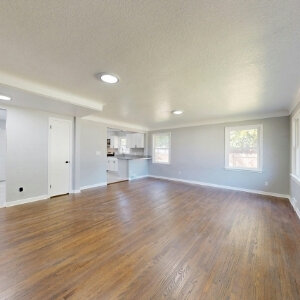
That deadline only matters if the listing works, and most fixer-upper listings fail in the first photo.
Dark, cluttered pictures shot on a phone tell buyers the owner gave up, and I’ve skipped showings over listings like that. Clear the rooms, open every blind, and shoot in daylight.
Shoot more than the pretty angles. A floor plan helps enormously with a house people will redesign in their heads, and investors want to see the panel, the water heater, and the foundation.
Lead with the bones. Lot size, square footage, original hardwood under the carpet, a detached garage, a second kitchen, and an extra legal lot. This buyer is doing math, and every fact you hand over is one fewer low guess.
Language shapes expectations. “Needs TLC” on a house with foundation movement sets a buyer up to feel misled, while “solid brick ranch, original kitchen and bath, priced for renovation” sets one up to arrive ready. The second listing gets fewer showings and far better offers.
Attach the inspection report, the repair estimates, and any remediation paperwork right to the listing. Sellers worry this scares people off. What it does is filter out the buyers who’d have walked at inspection anyway.
First-time buyers made up 30 percent of existing-home sales in August 2026, and plenty of them want something affordable enough to grow into. A priced-right fixer in a decent school zone reaches that group, especially paired with information about renovation loans their lender never mentioned.
Make the house easy to see, because a lockbox and clear access instructions matter more than staging. If a tenant or a family member is still living there, agree on showing rules before the listing goes live. A property buyers can’t get into drifts toward a price cut it never needed.
Frequently Asked Questions
Do I have to fix anything before selling a house that needs major repairs?
No. You can sell as-is in Texas. Property Code Section 5.008 still requires a written seller’s disclosure notice on most single-unit homes, and an as-is clause won’t cover a defect you already knew about.
Will a buyer’s lender block the sale if the house is in bad shape?
It can. Conventional and FHA appraisals flag health and safety problems like active leaks, exposed wiring, missing handrails, and failing roofs. Cash buyers and renovation-loan buyers get around that.
How much less will I get selling as-is versus repairing first?
Usually, more than the repair bill alone, because a buyer prices the work plus a cushion for surprises plus their own margin. Fixing one or two cheap, visible items is often worth it. Fixing everything rarely is.
Should I get an inspection before I list?
Usually yes. A pre-listing inspection costs a few hundred dollars and lets you set a price based on real numbers rather than guesses. It also removes the buyer’s biggest negotiating lever.
What if I owe more than the house is worth in its current condition?
Talk to your lender before you list, because short sales, loan modifications, and payoff negotiations all take time, and those options disappear once you fall behind.
If you’re sitting on a house with major repairs and a list longer than your patience, it helps to see the numbers side by side. What it’s worth as-is, what repairs would realistically return, and who’s buying in your area right now. You can contact us, and we’ll put all three in front of you. No obligation, no pressure to list.
Helpful Texas Blog Articles